Sonic Compass · Mojo Review · IEM (universal) · Deep Dive
Binary Acoustics 1900
The Sonic Compass review. Control everywhere, a holographic stage, and a lifted lower treble that four reviewers enjoy and one of us could not sit through — all five are right, and the reason is in the listener.
Competence everywhere instead of brilliance in one place. Holographic stage, resolution you can explore, PRaT that pushes forward, controlled bass — and a lifted lower treble that four reviewers enjoy and a treble-sensitive listener could not sit through. If 5–8kHz is not your sore spot, this is a bargain at US$235. If it is, audition first.
- Control across the whole frequency range — competence everywhere, not brilliance in one band
- Holographic staging and imaging: sounds arrive from places
- Separation and resolution you can explore, without a clinical tone
- Rhythm, bass and percussion lock in — PRaT that pushes forward
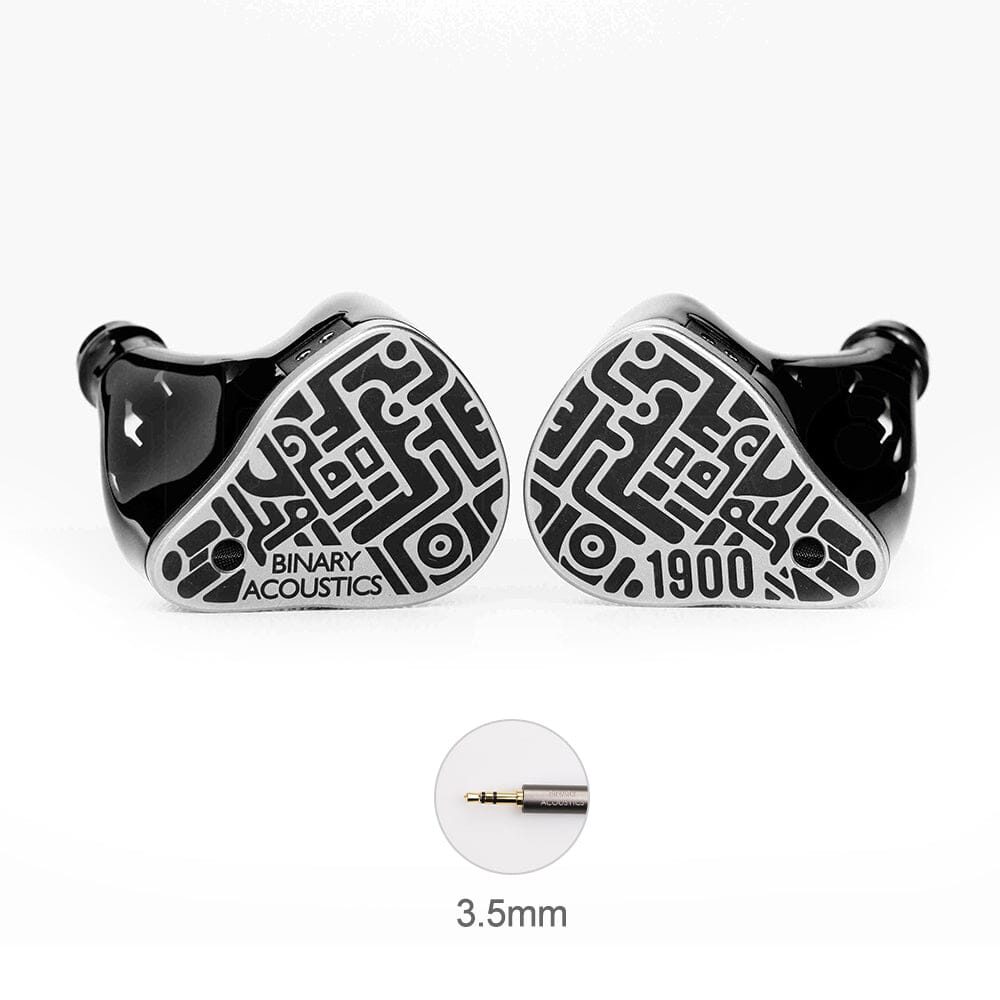
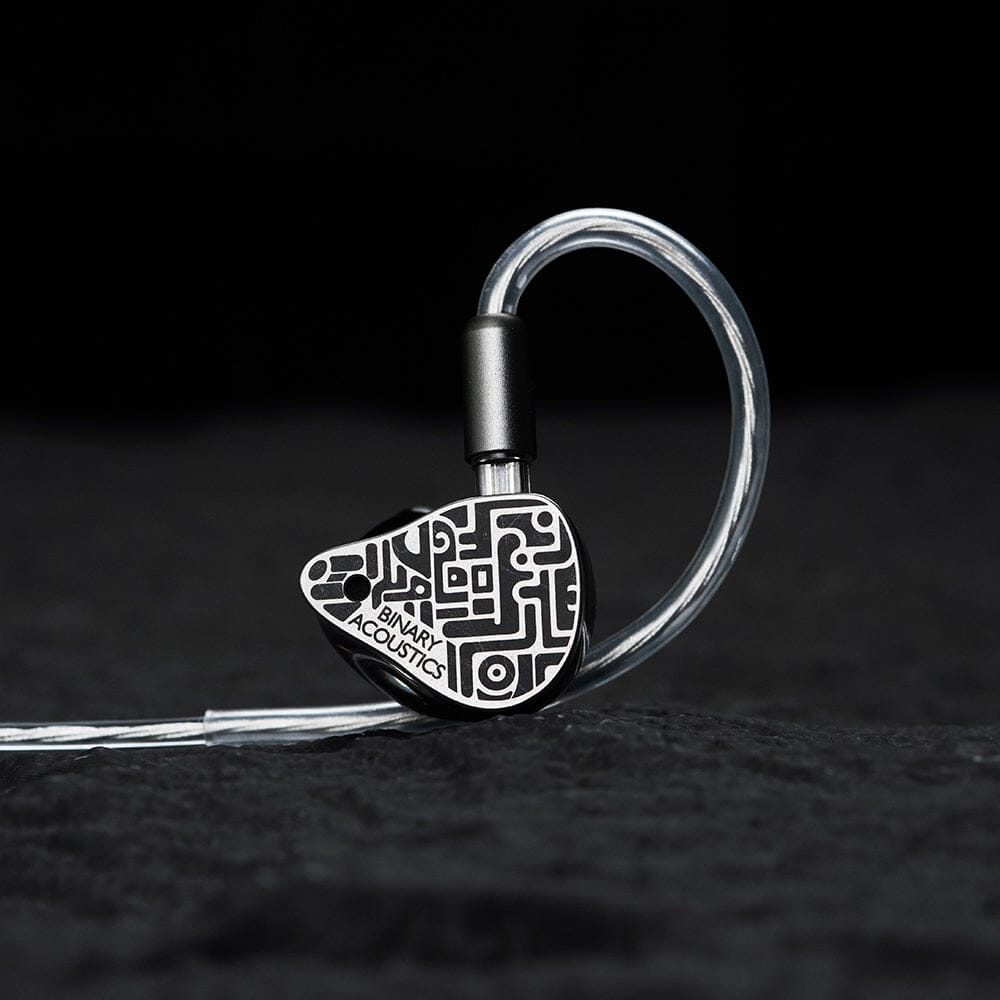
- 316L stainless engraved faceplates that look better in the hand than in the render
Where it sits
Sonic Compass does not score gear out of ten. Gear and listeners are plotted on the same seven axes, so a review tells you where a product sits — and you can see how far that is from where you sit. A position is a description, not a grade.
- Tone ColourBalanced · 40%
- Texture DetailVery detailed · 82%
- Dynamics JumpPunchy · 65%
- Space & ImagingVery spacious · 92%
- Timing & FlowRhythmic · 78%
- Comfort & FatigueBalanced · 45%
- Emotional EngagementImmersive · 60%
Neutral to cool. Vocals where the recording puts them; nothing thickens them. The one departure from neutral is a lift in the lower treble, which the most enthusiastic published reviewer confirms: "yes, they are boosted".
Very resolving. A mid-scale detail listener picking through a dozen instruments at 1:30 of Gunslinger's Glory. Separation kept coming up all evening. Both tour reviewers agree; one calls it excellent for the price.
Controlled rather than slamming. "Terrific" on Baba Blues, proper thud and slam on Oni Mode, "not as potent as other IEMs". Sub-bass extension untested — one reviewer reports roll-off below 40Hz.
Holographic. "Head going full Exorcist" on Voodoo Child; deliberate front-to-back placement on Babalao. Every published reviewer lists staging as a strength.
PRaT noticed twice unprompted on Kidjo by a listener who rates it his lowest priority. The earphone pushes it forward.
PROVISIONAL. Physically fine — small, light, nothing hurt, and every published reviewer scores comfort highly. The number is the 5–8kHz band on a treble-sensitive listener: a snare needing 3dB off, and a Kashmir remaster that ended the session. Level-matched retest on a different chain pending.
PROVISIONAL. Four question marks on the first track — the reviewer was assessing, not listening. Never Know got there; nothing else quite did. A first-session artefact, not a mark against the earphone.
How we review, and why there are no scores out of ten
Sonic Compass does not grade gear. We plot gear and listeners on the same seven axes — Tone Colour, Texture & Detail, Dynamics & Jump, Space & Imaging, Timing & Flow, Comfort & Fatigue, Emotional Engagement — so a review tells you where a product sits, and you can see how far that is from where you sit. A position is descriptive, never a grade: a cool tone score means "cool", not "bad". Fit is compatibility, not quality. This review is a good argument for why: five listeners, one earphone, and the disagreement lives in our ears.
The 1900
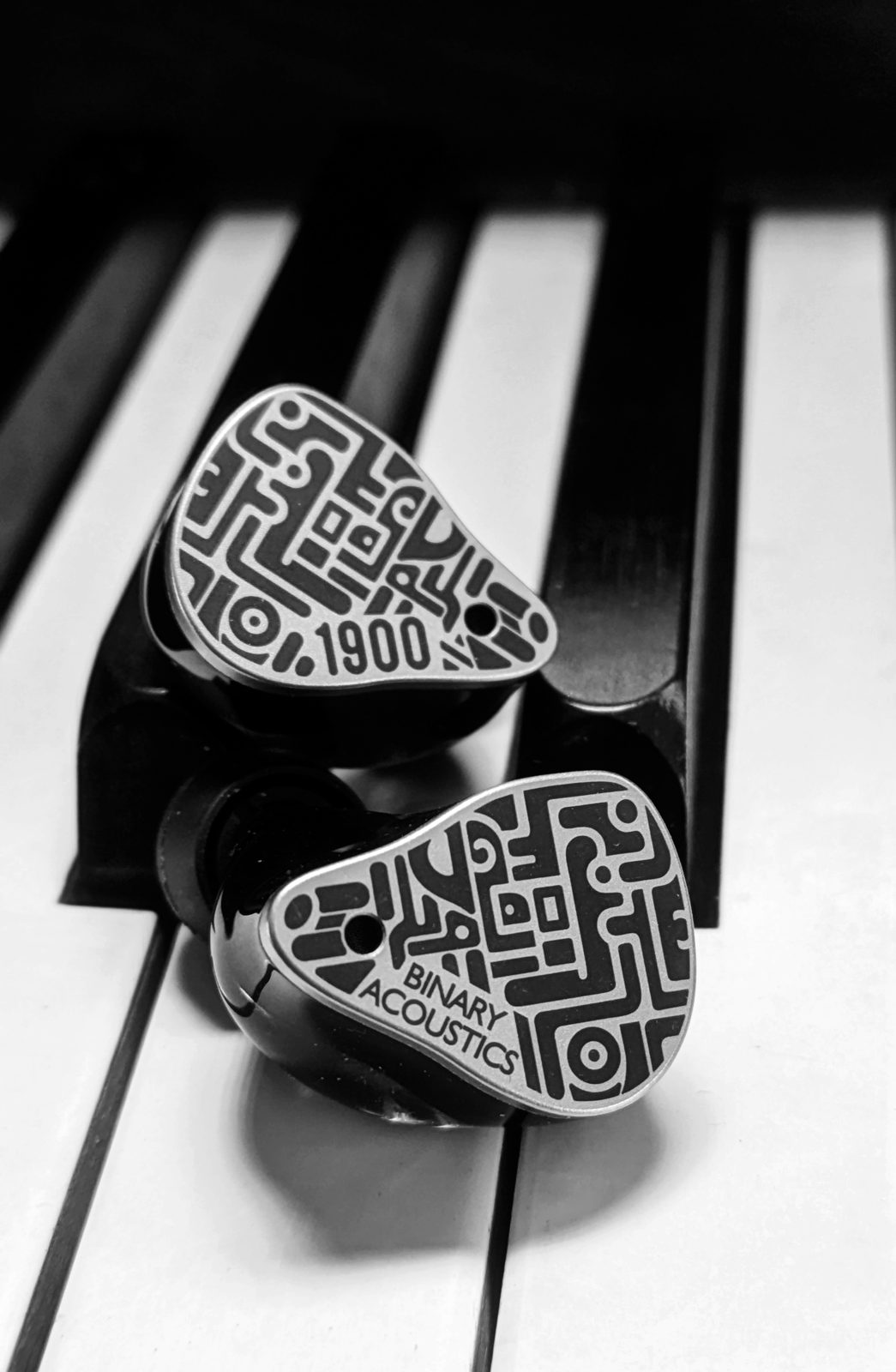
Binary Acoustics named it after The Legend of 1900, Giuseppe Tornatore's film about a pianist who never leaves the ocean liner he was born on, and engraved the faceplates with musical notes and vintage piano parts. Our reviewer photographed them on piano keys before knowing any of that. Under the plates: a six-driver hybrid per side — a 10mm dynamic driver paired with a 6mm passive radiator on bass, two balanced armatures on the mids, two customised balanced armatures on treble, and a three-way crossover with one bore per way. 10Ω, 124dB, US$235, launched 15 July 2026.
Design and build
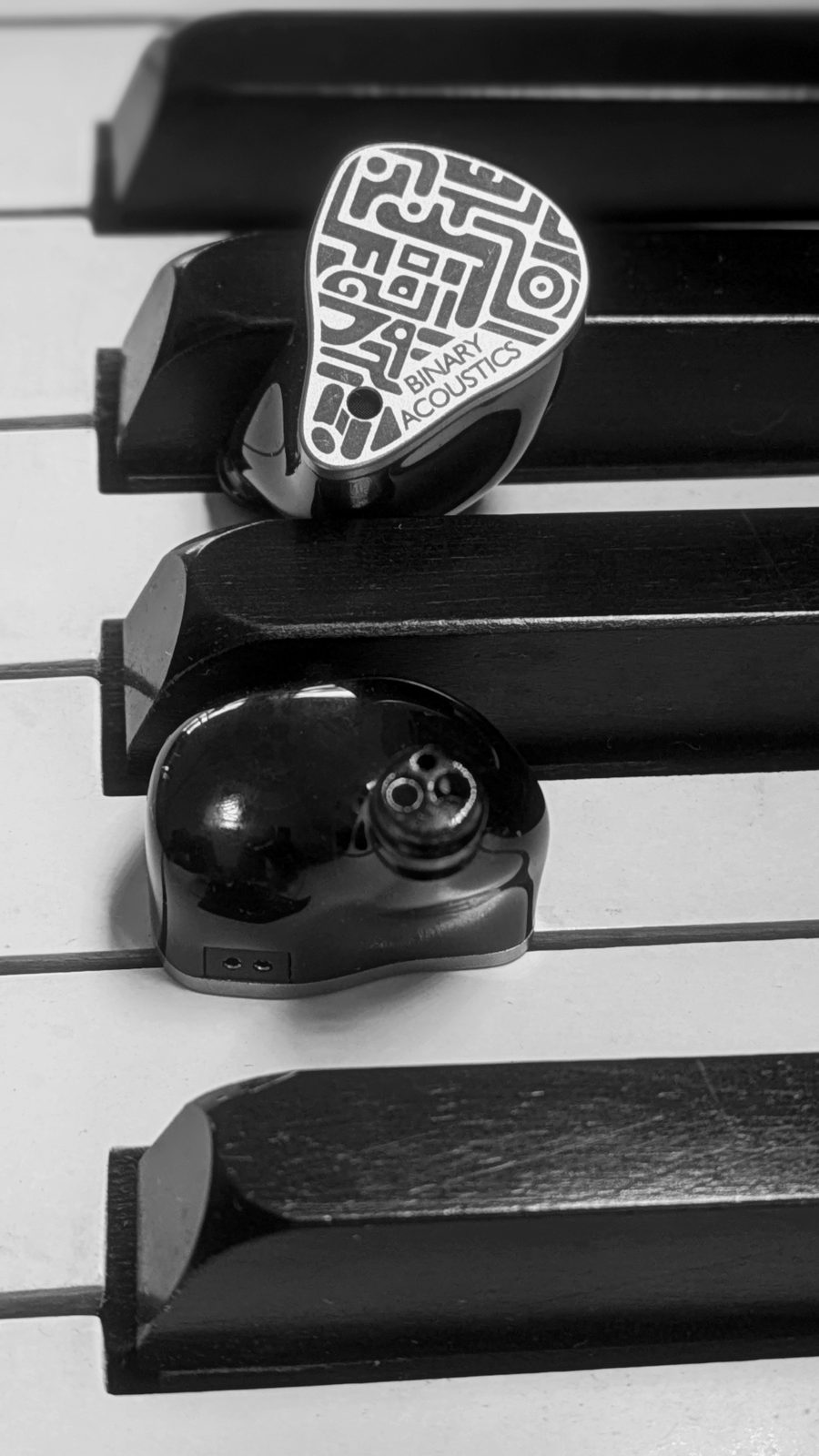
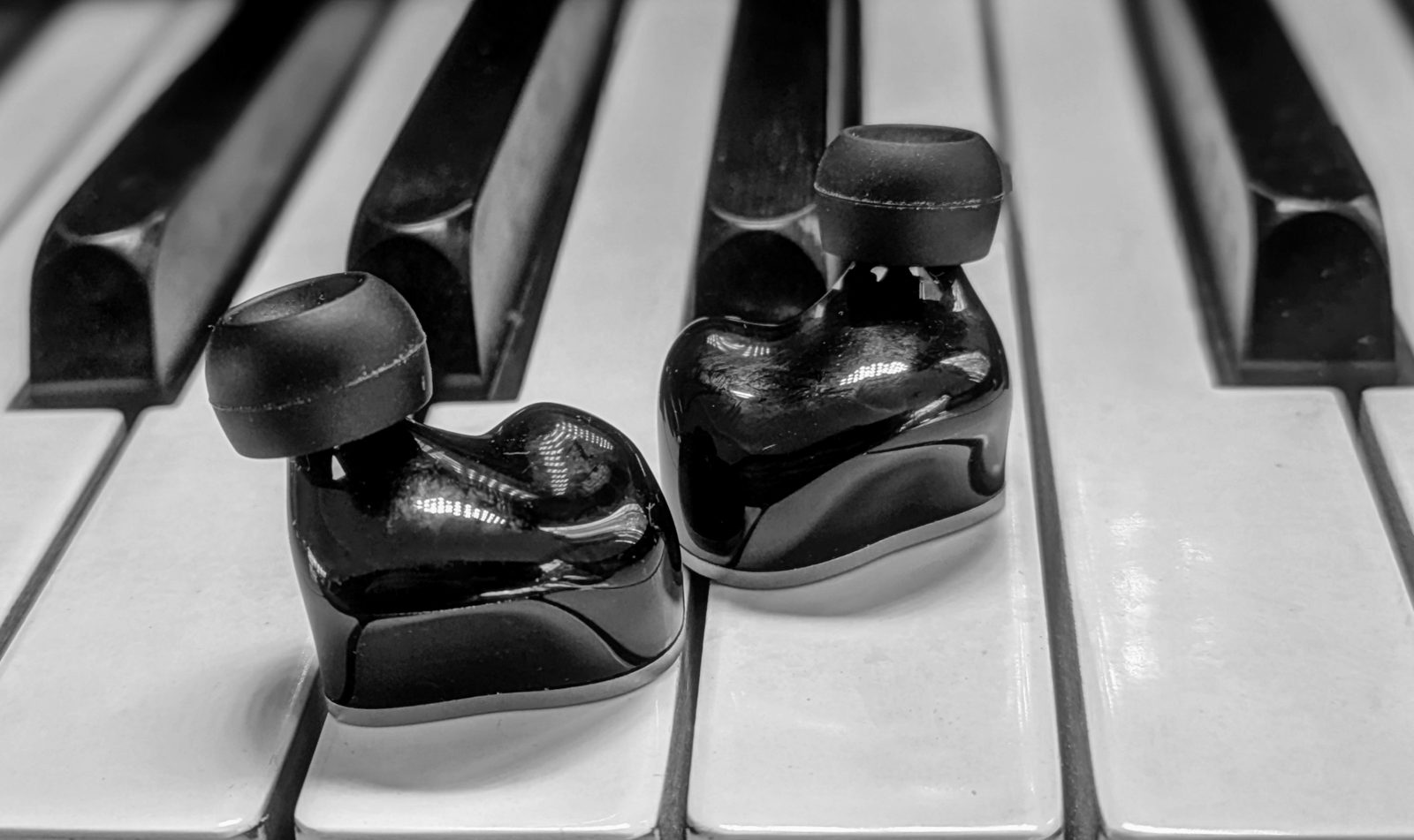
The faceplates are 316L stainless steel with a vintage-engraved maze of notes and piano parts; "BINARY ACOUSTICS" on the left, "1900" on the right. Behind them, a compact gloss-black resin shell with a flush 0.78mm 2-pin socket. HiFiGo's photography puts the nozzle at 6.09mm and the pair at 17.09g — small and light, and our reviewer's one-session note agrees: nothing hurt. Every published reviewer rates comfort highly, one of them 5 of 5 while admitting he is fussy enough to own 64 Audio.
In the box
One high-purity silver-plated OFC braided cable (3.5mm or 4.4mm chosen at purchase), a fabric zip case, silicone tips in multiple sizes and the paperwork. No foam tips — for most buyers a non-event; for a treble-sensitive one, the wrong thing to leave out, because foams pull down exactly the 5–8kHz band that troubled our reviewer.
The session
Our reviewer (profile: The Stage Builder — Stage 5.0, Comfort 5.0, Emotional 3.8, Dynamics 3.4, Detail 3.0, Timing 3.0, Tone 2.6; on record since July as treble-sensitive) ran the 1900 from a phone into a Muse HiFi M3 Ultra, stock silicone tips, one sitting, mostly Angelique Kidjo. It ended earlier than anyone wanted. Five genre rows covered.
Listening journey
The global note, written early and still standing: "These exercise excellent control across the frequency range. Where many of the recent IEMs through here excel in different ranges, these just deliver everywhere."
Angelique Kidjo
Baba Blues (St James Infirmary) (Afro-pop / blues). Dynamics terrific. Emotional engagement: four question marks, because the reviewer was distracted by the quality of everything else. First note of the night and in hindsight the most revealing one — admiring rather than listening.
Free Flow Flaca
Oni Mode (slower) (hip-hop). Kicking it. Excellent controlled bass, not as potent as other IEMs that have been through here but right in there with proper thud and slam. The strings articulate and sitting nicely apart from everything else — that separation keeps coming up all evening.
Chrome Sparks, Jónsi, Khalid
Sleeper (downtempo). Very fine presentation. Enjoyed a lot; nothing else written down, which is usually a good sign.
Angelique Kidjo
Voodoo Child (Afro-rock). Holographic. Unbelievable. The reviewer's head "going full Exorcist" trying to find where a sound was coming from. Then the first snag: a snappy snare that was too much. 3dB off at the Muse and the snare stopped hurting. Two things worth holding onto — the fix was at the source, not the earphone, and a 3dB cut solving it completely is high volume dependence showing up in the wild.
Angelique Kidjo
Never Know (Afro-pop vocal). Just perfect from start to finish. Her songs are vocal-centric, with mid or upper bass doing the percussive work, and that is squarely where these live.
Angelique Kidjo
Babalao (Afro-pop / percussion). The intro is wonderful: the male percussive vocals sit back behind the rest and create real depth and texture. PRaT excellent again. Separation supports picking up all the detail in the vocals and the instruments.
The Dead South
Illusion and Doubt, album (bluegrass / folk). All the songs sound solid. Reviewer was working, not tuned in — take it for what it is worth.
The Dead South
Gunslinger's Glory (bluegrass / folk). Resolution very impressive; you can hear very deep into the music. Treble on the cowbell brilliant, snare and shuffle sounds precise. At about 1:30 the song lays down a deep layer of many instruments and they are all there distinctly, explorable one at a time. Cowbell and snare are treble events, and here they were brilliant rather than painful — whatever hurts is narrower than "the treble".
Led Zeppelin
Kashmir, remaster (classic rock). "Too shrill in the treble and it hurts to listen for me." The same earphones did not do this on a Rockna Wavedream with a Cayin Sol. Session over.
| Track | Position | Note |
|---|---|---|
| Kidjo — Baba Blues | 80% | Dynamics terrific; emotional engagement unanswered — admiring, not listening. |
| Free Flow Flaca — Oni Mode | 78% | Excellent controlled bass, proper thud and slam; strings articulate and apart. |
| Chrome Sparks — Sleeper | 82% | Very fine. Nothing else written down, which is a good sign. |
| Kidjo — Voodoo Child | 88% | Holographic. Head going full Exorcist. Snare needed 3dB off at the source. |
| Kidjo — Never Know | 96% | Just perfect from start to finish. |
| Kidjo — Babalao | 90% | Depth and texture from the placed male vocals; PRaT excellent. |
| Dead South — Illusion and Doubt | 75% | Solid throughout; reviewer was working, not tuned in. |
| Dead South — Gunslinger's Glory | 92% | Resolution very impressive; cowbell brilliant; the 1:30 layering all there. |
| Led Zeppelin — Kashmir (remaster) | 15% | Too shrill in the treble; painful for a treble-sensitive listener. Session over. |
Critical observations
Where the 1900 sits
The shape leans out on Space & Imaging, Texture & Detail and Timing & Flow, sits neutral-to-cool on Tone with a lift in the lower treble, and is honest about the two axes it has not earned yet: Comfort & Fatigue (45, provisional) and Emotional Engagement (60, provisional). Competence everywhere, not brilliance in one place — and one band that behaves differently depending on who is wearing them.
Bass
Controlled, distinct, with proper thud and slam; "not as potent as other IEMs". Mid and upper bass do the percussive work on Kidjo and the 1900 executes it. Two published reviewers flatly contradict each other — one hears bleed into the mids and boom, the other says it does not spread into the lower midrange at all. We heard the second; a disagreement that hard is tips, seal or source. One reviewer reports roll-off below 40Hz. Untested in session one, and it is the mismatch most likely to surface against a profile that wants real sub-bass extension.
Mids and detail
Vocals where the recording puts them; nothing thickens them. Never Know was perfect; Babalao built depth from placed male vocals. On Gunslinger's Glory a mid-scale detail listener was picking through a dozen instruments one at a time. Both tour reviewers said the same in their own words; one called it excellent for the price.
Treble
Upper treble is brilliant: air, extension, a cowbell that sparkled. Lower treble, roughly 5–8kHz, is lifted — the most enthusiastic published reviewer says so outright: "yes, they are boosted". Two things bit: a snare on Voodoo Child that needed 3dB off at the source, and the Kashmir remaster, which ended the session. Four published reviewers enjoy this treble, including one who calls himself treble-sensitive and heard nothing sharp. Our reviewer's own profile answers read "bright treble on vocals makes me physically wince" and "sibilance makes me stop listening immediately". One against four, and all five are right. This is not a treble problem; it is lower-treble energy, most people enjoy it, and if you are built like our reviewer you need to know before you spend US$235.
Stage and imaging
Holographic. Sounds arrive from places. The Exorcist moment on Voodoo Child is the clearest hit of the evening; Babalao's front-to-back placement backs it up. Every published reviewer independently lists staging and imaging as a strength.
Timing and flow
PRaT came up twice unprompted, both times on Kidjo, both times as a strength — from a listener who rates timing at the midpoint and as his lowest priority. The earphone is pushing it forward.
Comfort note
Physically fine: small, light, nothing hurt, and every published reviewer scores comfort highly. The provisional 45 is the 5–8kHz band on a treble-sensitive listener with high volume dependence, on a phone → tube-stage chain feeding a 10Ω / 124dB load. The chain is amplifying something genuinely there; it is not inventing it. Level-matched retest on the Rockna/Sol is the single most useful thing session two can do.
Cross-check
Prime Audio: treble "well judged", bass "real authority". Resonance Reviews: "not overly-bright, sharp, or sibilant", mid-bass forward, rolls off below 40Hz. Tour reviewer (Harman-leaning): treble "superb", "biggest positive surprise", but "yes, they are boosted"; lists "bass too much" as a con. Tour reviewer (EP321 owner): treble "enough presence to keep the warmer body from becoming dull"; "nobody needs to worry about mud". Sits above the Kiwi Ears Aether (~US$170) and below the Xenns Mangird Tea Pro (~US$359); one reviewer prefers it to the Raptgo Hook-X; two independently guessed a considerably higher price. Still nobody with a measurement rig — the graph on HiFiGo's page is the manufacturer's own.
Frequency balance
Untested in session one. Reviewer's profile wants real extension; one published reviewer reports roll-off below 40Hz. The open question.
Controlled and distinct, with thud. Does the percussive work on Kidjo and stays clear of the mids — published reviewers disagree with each other on bleed; we heard none.
Neutral. Vocals wherever the recording puts them; male percussive vocals placed back for depth on Babalao. Never Know perfect start to finish.
Lower treble (5–8kHz) lifted — painful on a hot remaster for a treble-sensitive listener; enjoyed by four published reviewers. Upper treble present, extended and clean: the cowbell on Gunslinger's Glory was brilliant.
Centred and honest. The recording decides where they sit; the 1900 does not move them.
- Baba Blues (St James Infirmary)Angelique Kidjo
- Oni Mode (slower)Free Flow Flaca, ndls404
- SleeperChrome Sparks, Jónsi, Khalid
- Voodoo ChildAngelique Kidjo
- Never KnowAngelique Kidjo
- BabalaoAngelique Kidjo
- Illusion and Doubt (album)The Dead SouthIllusion and Doubt
- Gunslinger's GloryThe Dead SouthIllusion and Doubt
- Kashmir (remaster)Led ZeppelinPhysical Graffiti
- Driver Configuration
- 1DD + 1 passive radiator + 4BA hybrid (6 drivers per side)
- Driver Details
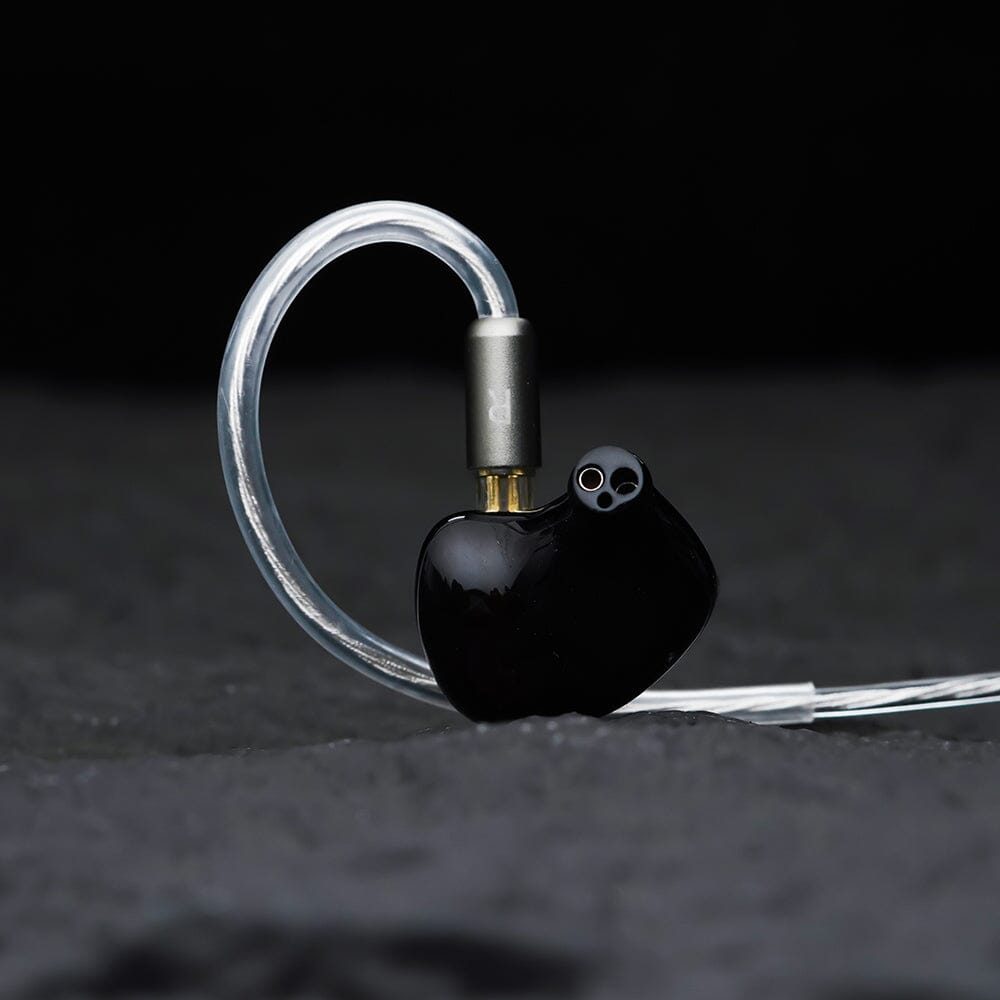
- 10mm dynamic driver paired with a 6mm passive radiator (bass); two balanced armatures (mids); two customised balanced armatures (treble); 3-way crossover, one bore per way — three bores visible in the nozzle
- Impedance
- 10Ω
- Sensitivity
- 124dB
- Weight
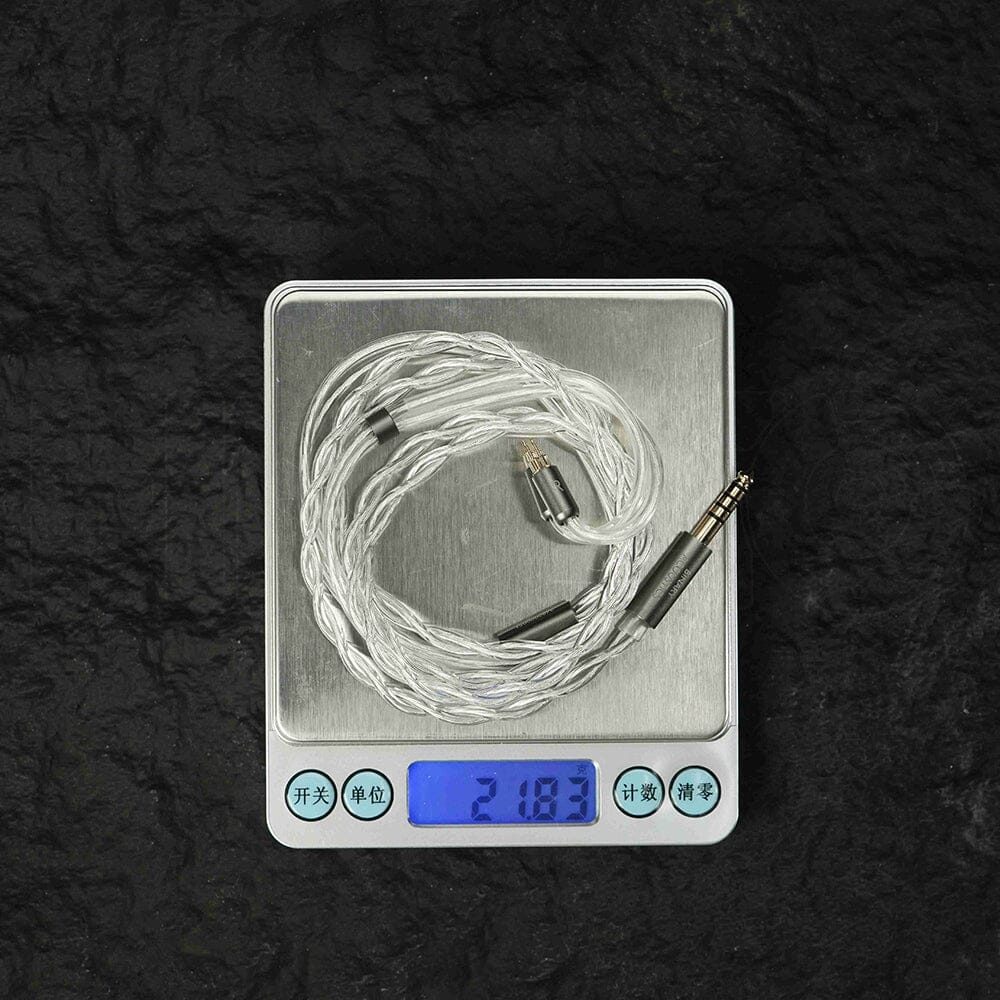
- 17.09g per pair; cable 21.83g (HiFiGo)
- Frequency Range
- 8Hz–40kHz (manufacturer)
- Build Materials
- 316L stainless steel faceplate with vintage engraving of musical notes and piano parts; gloss-black resin shell; 6.09mm nozzle
- Cable Connectors
- 0.78mm 2-pin. High-purity silver-plated OFC braided cable; 3.5mm or 4.4mm termination chosen at purchase
- Isolation Leakage
- Not assessed in session one
- Power Requirements
- Very easy to drive (10Ω / 124dB) and very source-revealing — a low output-impedance source is the sensible choice. Behaved differently on a phone → Muse HiFi M3 Ultra than on a Rockna Wavedream → Cayin Sol
- Accessories
- Silver-plated OFC braided cable, fabric zip case, silicone ear tips in multiple sizes, paperwork. No foam tips
- Build Quality Notes
- Launched 15 July 2026 at US$235 MSRP. Piano-key photographs by the reviewer; product photography Binary Acoustics via the official HiFiGo listing, credited.
Competence everywhere instead of brilliance in one place. Holographic stage, resolution you can explore, PRaT that pushes forward, controlled bass — and a lifted lower treble that four reviewers enjoy and a treble-sensitive listener could not sit through. If 5–8kHz is not your sore spot, this is a bargain at US$235. If it is, audition first.
Buy it if…
staging and imaging are what you listen for — the 1900 is holographic at US$235; if your library is vocal-centric with percussive mid-bass (Kidjo is made for these); if you want resolution you can explore without a clinical tone; if you enjoy energy between 5 and 8kHz — four published reviewers are telling you these are a bargain; and if you have a source with low output impedance and know what it is doing.
Audition first if bright vocals or sibilance make you wince; if your library leans on hot remasters; if you need real sub-bass extension — one reviewer reports roll-off below 40Hz and we have not tested it yet; or if you want foams in the box — you will be buying them separately, and they will cost you some of the air these do so well.
Session two has to answer: Kashmir on the Rockna Wavedream / Cayin Sol at matched level; the Voodoo Child snare on both chains; foam tips and what they cost in air; something with real sub-bass; a three-hour sitting for comfort; and Kidjo again, without a notebook.