Sonic Compass · Mojo Review · IEM (universal) · Deep Dive
Juzear Fiesta (× Vivir Digital)
The Sonic Compass review. A party earphone that delivers — big physical bass, a warm forgiving top end, and more involvement per dollar than anything at this price, as long as your library has a beat.
Buy it for beats, not for strings. A specialist that knows exactly what it is: inside its lane — anything with a groove — excellent and very good value; outside it, genuinely the wrong tool. Warm, big, physical, forgiving. Trades resolution for involvement, and inside that lane it is the right trade.
- Bass with real command and grip — big, physical, and it does not turn to mush
- Makes music more involving: the earphone you keep reaching for even knowing it is the less detailed one
- Warm, forgiving top end — nothing bites, nothing fatigues
- Timing and flow: the notes lock together and move
- Unusually complete package — two 1.35m cables (3.5mm mic + 4.4mm balanced), leather case, three tip styles at US$119.99
Where it sits
Sonic Compass does not score gear out of ten. Gear and listeners are plotted on the same seven axes, so a review tells you where a product sits — and you can see how far that is from where you sit. A position is a description, not a grade.
- Tone ColourVery warm · 80%
- Texture DetailSmooth, blended · 30%
- Dynamics JumpVery punchy · 85%
- Space & ImagingIntimate · 33%
- Timing & FlowVery rhythmic · 83%
- Comfort & FatigueEasy-going · 60%
- Emotional EngagementVery immersive · 83%
Warm and rich rather than crisp. Bass-first tuning with a relaxed top end. Published: "warm, thick and relaxed", "leans hard into music being fun".
Smooth and blended. Less separation and micro-detail than an analytical set; dense mixes soften. Published: "merely average detail", "not a detail-first IEM".
The headline. Bass blasts into place with real command; strong sub-bass extension and physical rumble uncommon at the price.
Close, centred, intimate. Height and weight from the bass rather than width. Imaging good, not sharp. Published: "very intimate and centred, not much width".
The axis it quietly wins. Everything locks together and moves — "command and grip". Where an analytical set shows every element and never glues them, the Fiesta glues them in one bar.
PROVISIONAL. Our only comfort observation was a sibilance note on opera at unmatched (raised) volume; every published source reports fatigue-free listening and an easy seal, with one noting a wide nozzle. Expect this to move up on a level-matched retest.
The whole case in one axis. It loses on tone, detail and stage against an analytical set, and you keep listening anyway. Aimed straight at involvement.
How we review, and why there are no scores out of ten
Sonic Compass does not grade gear. We plot gear and listeners on the same seven axes — Tone Colour, Texture & Detail, Dynamics & Jump, Space & Imaging, Timing & Flow, Comfort & Fatigue, Emotional Engagement — so a review tells you where a product sits, and you can see how far that is from where you sit. A position is descriptive, never a grade: a warm tone score means "warm", not "good". Fit is compatibility, not quality.
The Fiesta
Juzear built it with Latin-American reviewer Vivir Digital, and the brief was explicit: move away from "dry, analytical sound" toward what the brand calls a Joy of Music tuning inspired by "the vibrant energy, warmth and soul of Latin-American festivities". They got there. This is a specialist. Inside its lane — anything with a groove — it is excellent and very good value. Outside it, it is genuinely the wrong tool. We respect that more than a set that does everything adequately.
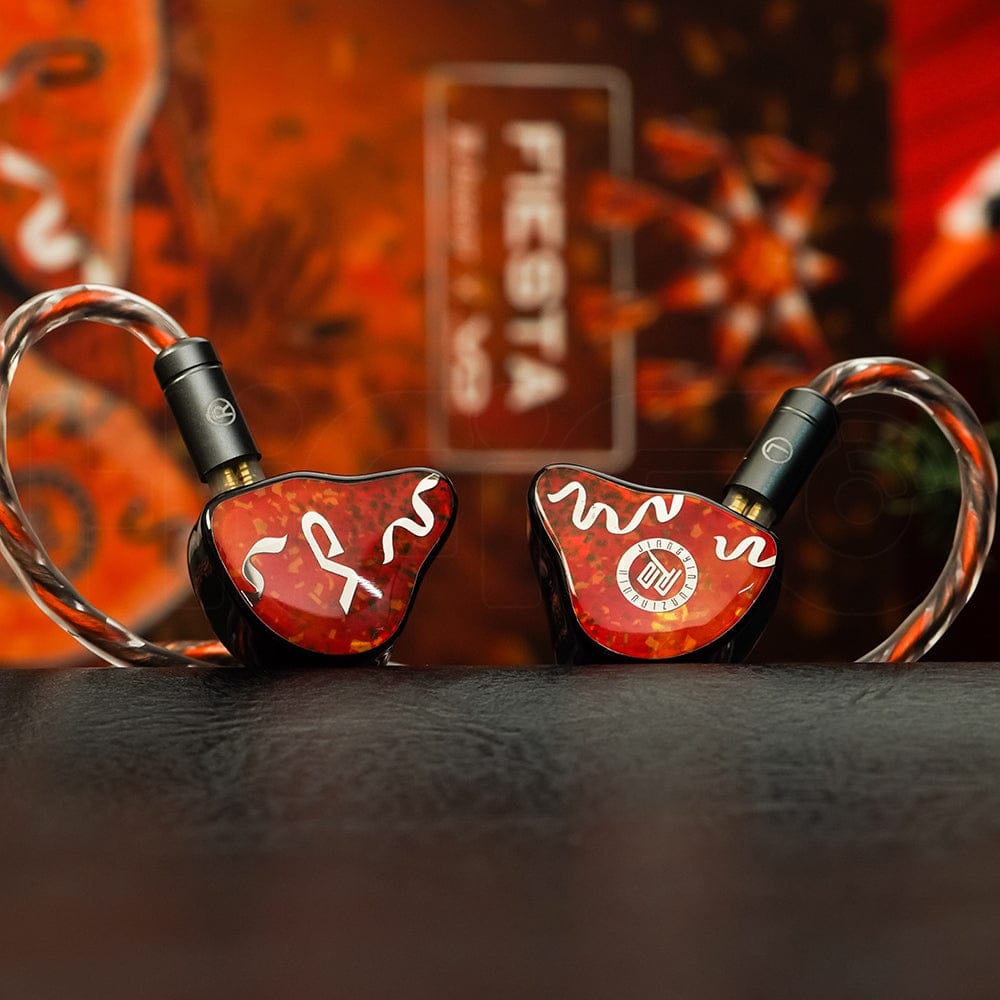
Design and build
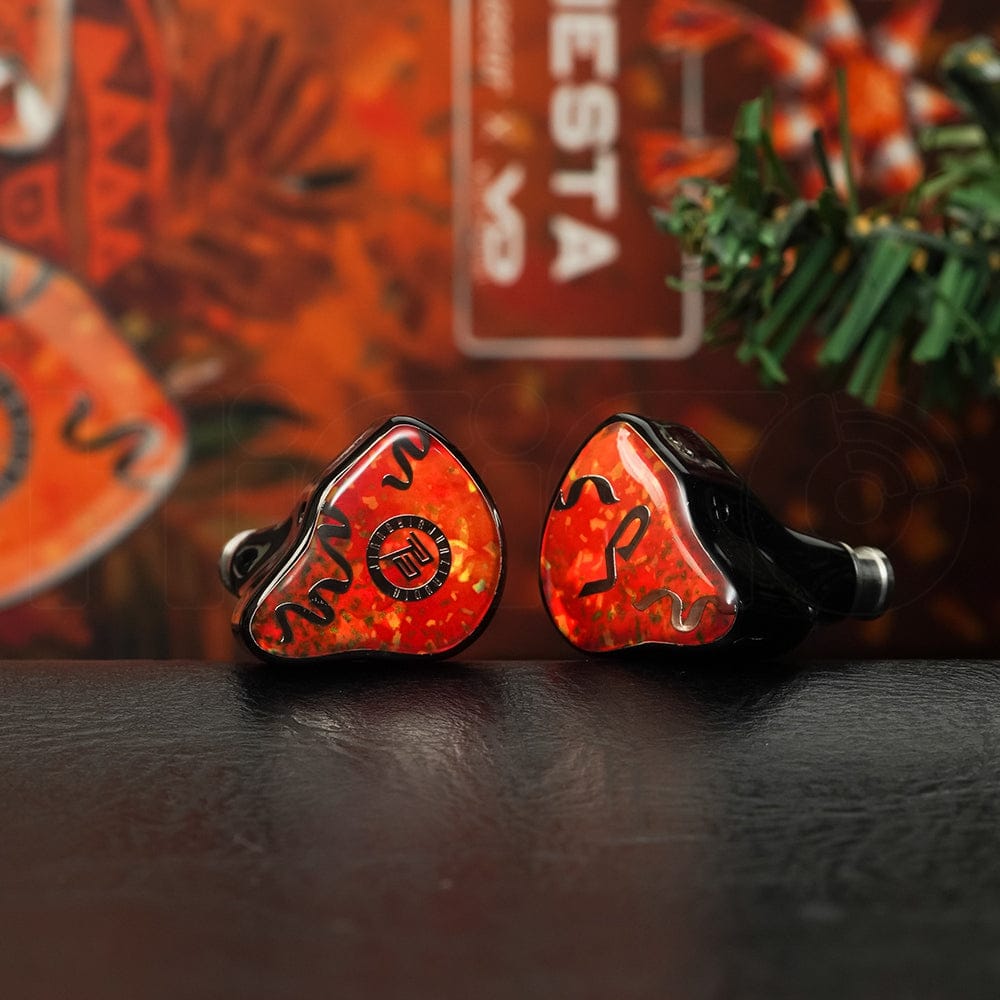
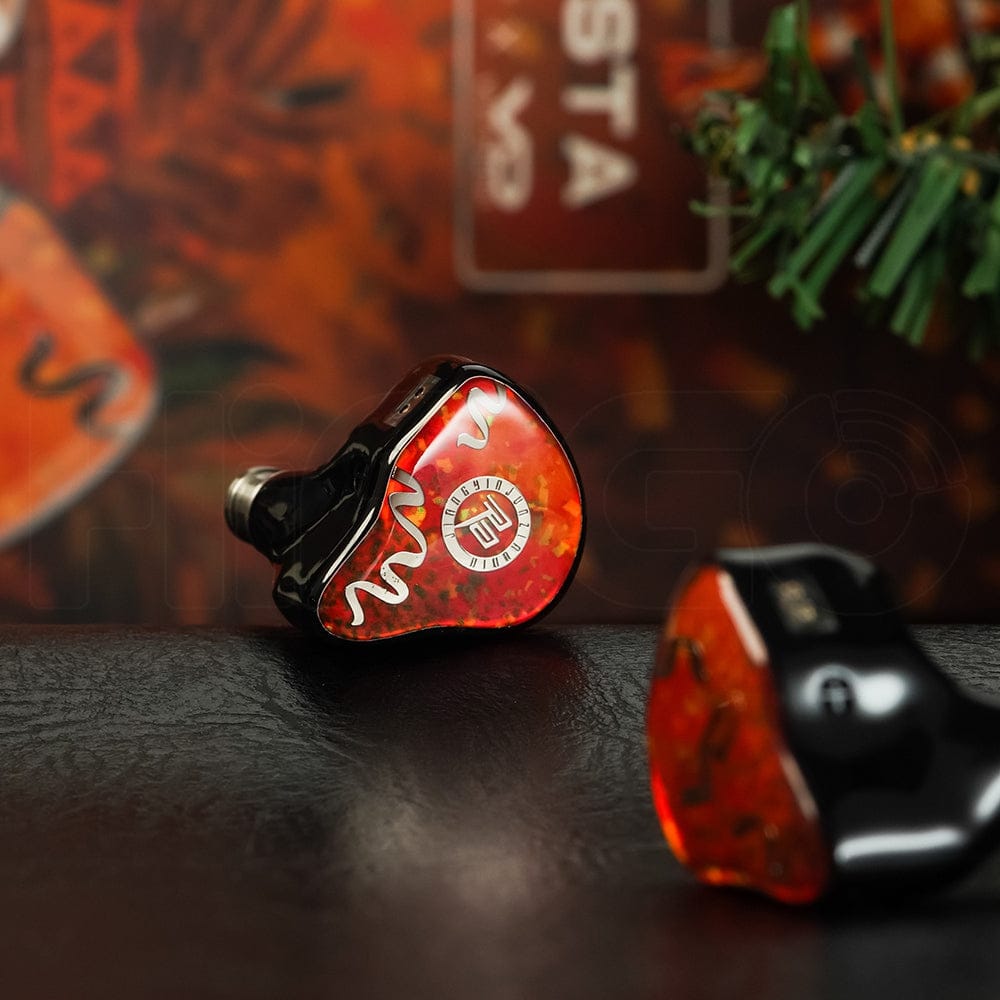
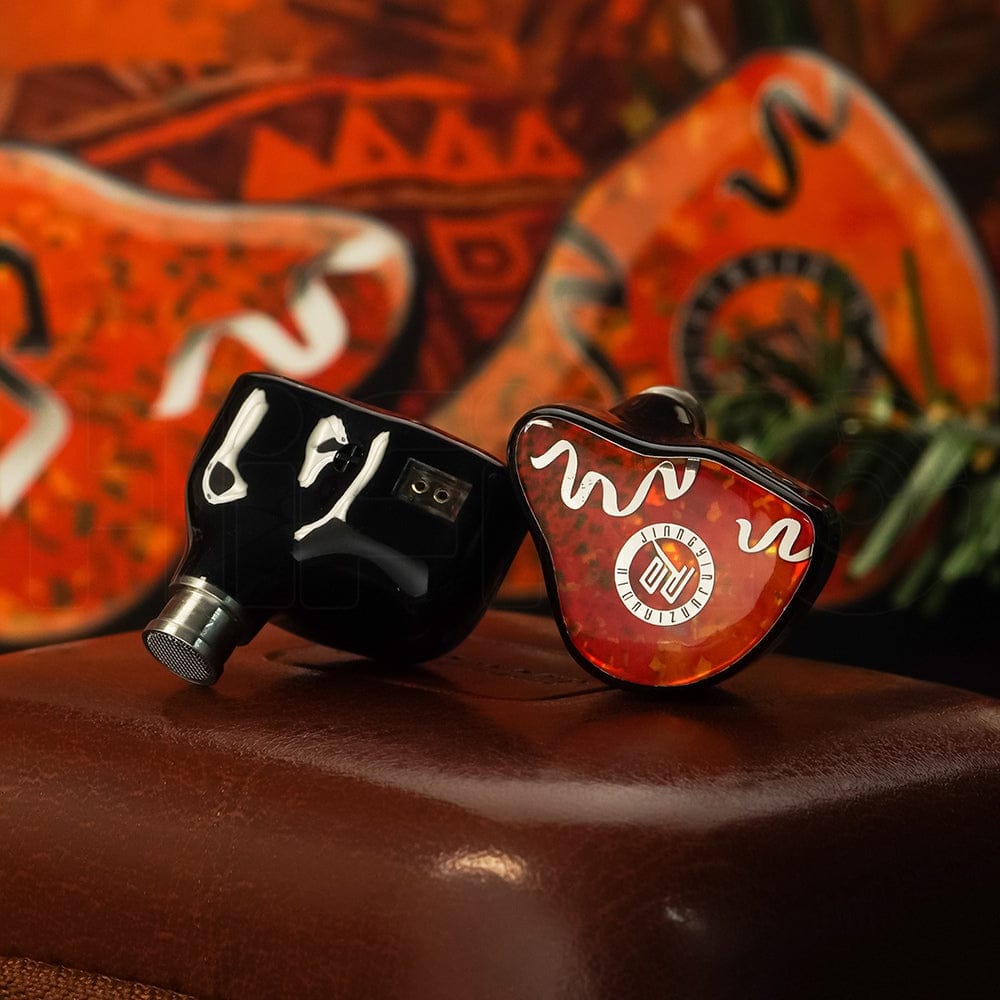
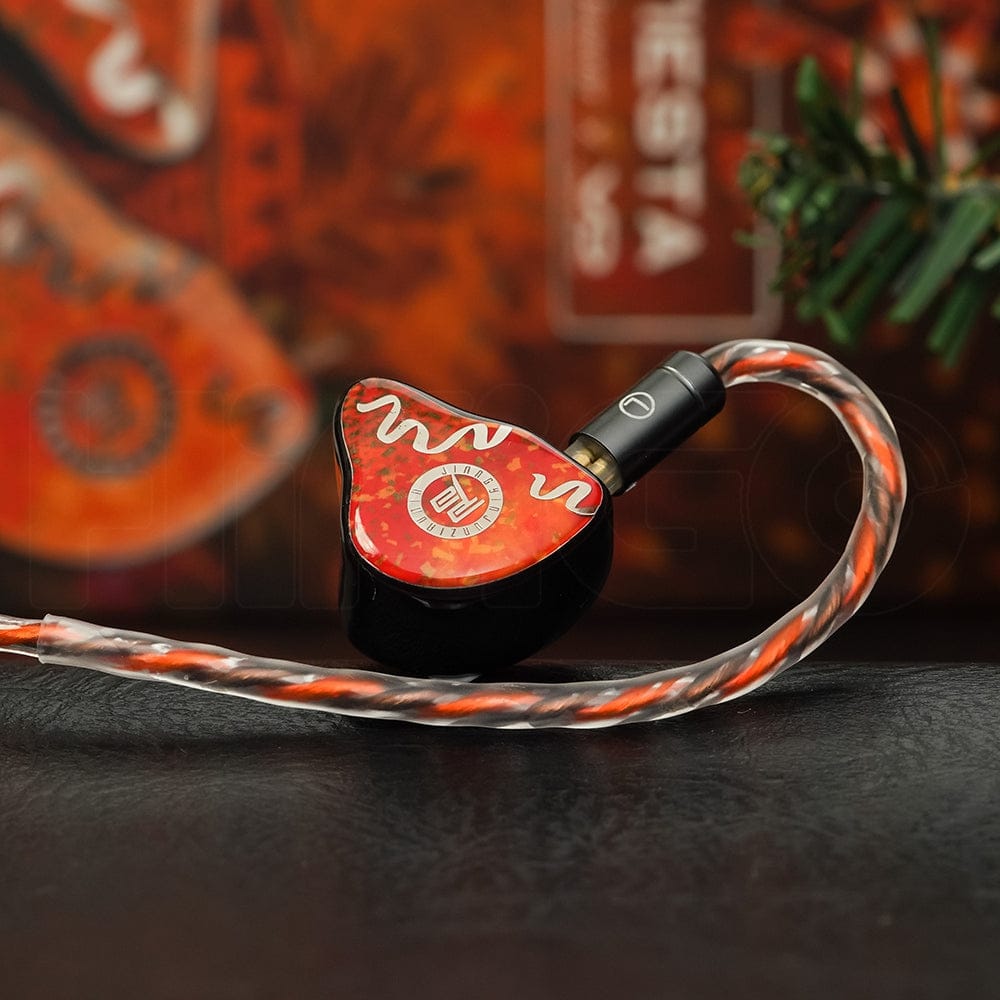
The faceplates are a swirl of vivid orange and chocolate brown under a CNC-machined resin panel, drawn from piñata patterns. Not subtle; not trying to be, and as HiFi Oasis put it, "it works in its favour". Shells are 3D-printed medical-grade resin, semi-ergonomic, with a smoked-black body. Inside: a third-generation 10mm dynamic driver with a carbon-PU composite diaphragm on bass, a composite dual BA on mids, a custom BA on treble, and a three-way crossover on a gold-plated PCB with three independently damped acoustic tubes. 32Ω, 109dB — it runs happily from a phone dongle. Published reviews put fit at "extremely comfortable, easy to reach a good seal", with one noting the nozzle runs wide and may bother smaller ears.
In the box
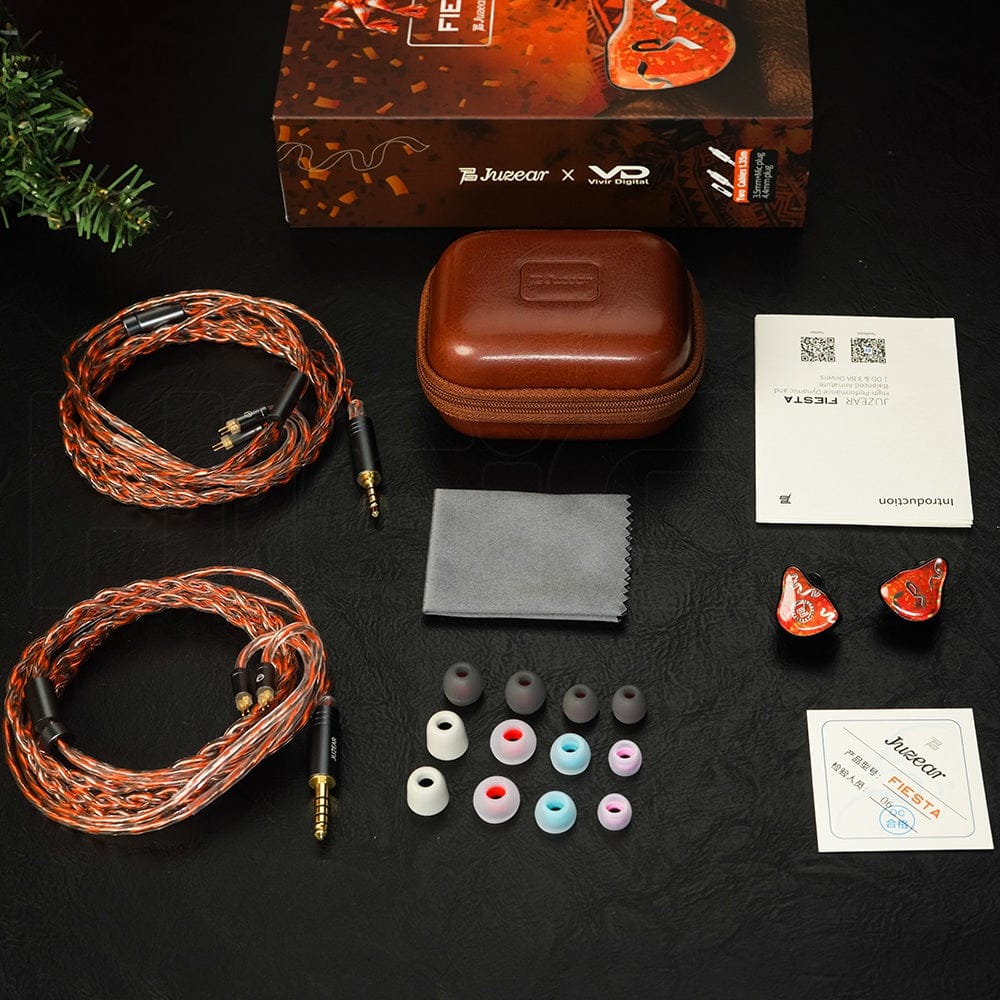
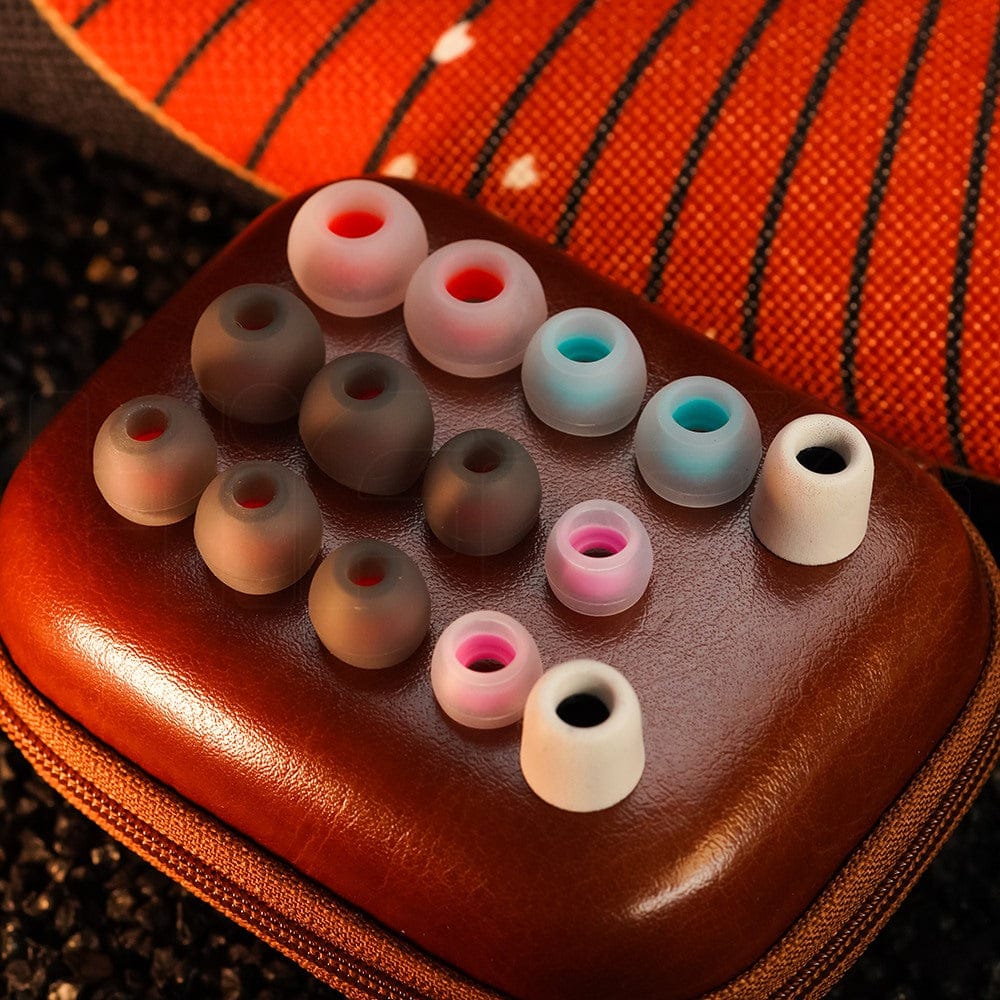
Two 1.35m cables (3.5mm with in-line mic, and 4.4mm balanced; hybrid single-crystal copper / silver-plated copper, four-strand double-helix braid, 70 conductors per strand), a brown leather-look zip case, three styles of silicone tips in three sizes, a cloth and the paperwork. Most sets at US$120 give you one cable and a bag of tips; this package changes the value maths.
The session
Our reviewer (profile: The Stage Builder — Stage 5.0, Comfort 5.0, Emotional 3.8, Dynamics 3.4, Detail 3.0, Timing 3.0, Tone 2.6) ran the Fiesta back to back with the more analytical Juzear × KOTO Nebula, same tracks, same evening, laptop into a Muse HiFi M3 Ultra, single-ended, stock tips. Five of the fifteen rows on our genre grid.
Listening journey
Four seconds is all it needs. The Fiesta made its case within about four seconds of the first bass note, and it never really let go.
Half Moon Run
Sun Leads Me On / It Works Itself Out / Everybody Wants (indie/rock). Resolution down against the analytical set, bass far more physical, and the tuning becomes obvious fast. Vocals jump forward and sit slightly apart from the band; the percussion intro on It Works Itself Out is tight and the steel-string guitar well defined. "Could be mushy, could use some more separation" went into the notes — and so did the fact that the reviewer kept listening. Different, not better; more fun.
Free Flow Flava & ndls404
Oni Mode (Slowed) (hip-hop). The track that makes the case. Ripping bass that blasts into place with real command and grip over the song, the Japanese string samples tight and precise above it. "My heart, head and feet all grooving away." The analytical set could show every element of this track and never glue them into a piece of music; the Fiesta glued them in one bar.
Verdi
Macbeth, Act 1: Nel dì della vittoria (opera). Not right. The top-end sparkle and magic this music needs is not in the tuning. Vocals carry a touch more weight. Not bad here — wrong here. The thing it is built for is absent from this music.
Armin van Buuren & Shapov
Out of Origin (Mixed) (EDM/trance). "These relax so well into this genre." Short note, no argument. It was built for this.
Punch Brothers
Le Ruisseau (acoustic chamber). Next to the analytical set the Fiesta was clearly the lesser earphone, and it was not close. Fingers on strings and the sound of the pluck is not what it does.
Genres covered: indie/rock, slowed hip-hop, opera, EDM, acoustic chamber. Untested and therefore unclaimed: female vocal, male vocal, jazz, metal, funk/soul, ambient, live recordings, deliberately poor recordings, reference material. The poor-recording row matters most for a warm, forgiving earphone and it is still empty.
| Track | Position | Note |
|---|---|---|
| Half Moon Run — Sun Leads Me On | 70% | More physical, less resolved; vocals forward; could be mushy — and the reviewer kept listening. |
| Free Flow Flava — Oni Mode (Slowed) | 95% | Ripping bass, command and grip. Heart, head and feet. |
| Verdi — Nel dì della vittoria | 25% | Not bad — wrong. The sparkle it needs is not in the tuning. |
| Armin van Buuren — Out of Origin | 90% | Relaxes straight into the genre. Built for it. |
| Punch Brothers — Le Ruisseau | 35% | The analytical set was clearly better here, and not close. |
Critical observations
Where the Fiesta sits
The shape leans out toward Dynamics, Timing and Emotional Engagement and pulls in on Detail and Stage. Tone is firmly warm. That is the trade, stated plainly: it gives up resolution for involvement. If you listen with your feet rather than your ears, that is a good trade.
Bass
The headline. Big, physical, genuinely satisfying, and it does not collapse into the shapeless blob cheap bass tuning usually becomes. Strong sub-bass extension with real rumble; the 10mm driver is, in one reviewer's phrase, "tuned to mimic a home-theatre subwoofer". Mid-bass is elevated and can thicken on already-warm recordings, bleeding a little warmth into the lower mids on dense mixes.
Mids and detail
Vocals forward, sitting slightly apart from the band rather than blending in. Male vocals full and rich; female vocals a touch more laid back. Separation softens when a lot is happening; micro-detail is not a priority. Published consensus: "merely average detail", "not a detail-first IEM".
Treble
Smooth, relaxed, non-fatiguing by design. Cymbals and hi-hats present but not crisp; air and sparkle are not what it does. A feature on beat-driven music, the whole problem on opera.
Stage and imaging
Close, centred, intimate. The bass gives height and weight, not width. Imaging good rather than sharp. "Very intimate and centred, not much width" and "more depth and height than width" from published reviews match what we heard.
Timing and flow
The axis the Fiesta quietly wins. Everything locks together and moves. "Command and grip" is the phrase in the notes, and we have not found a better one.
Emotional engagement
The whole case in one axis. It is not the more detailed earphone; put it next to something analytical and it loses on tone, detail and stage. And you keep wanting to listen to it anyway.
Cross-check against other ears
On the Fiesta our reviewer is almost exactly with the crowd: warm and thick (HiFi Oasis, Prime Audio, two Japanese reviews), physical bass, average detail, intimate stage, recommended for EDM, hip-hop, reggaeton and rhythm-led music. HiFi Oasis: 8/10, Highly Recommended, Great Value. One exception, below.
Honest limits
One session, five genre rows. No measurements taken; every position is listening, cross-checked against published reviews and flagged where unearned. Our reviewer raised the volume on switching to the Fiesta after the first track and never level-matched back; loud flatters bass and punch and makes treble edgier. The only comfort observation in the notes was a sibilance note on the Verdi at that raised volume, and every published source reports the opposite — "no sibilance", "tuned to avoid sibilance", "non-fatiguing". We are treating that as an artefact of the method, not a fact about the earphone, so the Comfort position below is PROVISIONAL and we expect it to move up on a level-matched retest. Both Juzear sets were bought, not supplied. Product photography is Juzear Audio's, credited.
Frequency balance
Strong extension with real physical rumble; blasts into place and holds its shape.
Elevated and satisfying; thickens on already-warm recordings and bleeds a little warmth into the lower mids on dense mixes.
Warm and full. Vocals forward and slightly apart from the band; male vocals full and rich, female a touch laid back. Separation softens when a lot is happening.
Smooth, relaxed, non-fatiguing by design. Cymbals present but not crisp; air and sparkle are not a priority.
Forward and involving, sitting slightly apart from the mix rather than blending in.
- Sun Leads Me OnHalf Moon RunSun Leads Me On
- It Works Itself OutHalf Moon RunSun Leads Me On
- Everybody WantsHalf Moon RunSun Leads Me On
- Oni Mode (Slowed)Free Flow Flava, ndls404
- Macbeth, Act 1: Nel dì della vittoriaGiuseppe VerdiMacbeth
- Out of Origin (Mixed)Armin van Buuren, Shapov
- Le RuisseauPunch BrothersAll Ashore
- Driver Configuration
- 1DD + 3BA hybrid (4 drivers per side)
- Driver Details
- 10mm 3rd-generation dynamic driver with carbon-PU composite diaphragm (bass); composite dual BA (mids); custom BA (treble); 3-way crossover on gold-plated PCB with three independently damped acoustic tubes
- Impedance
- 32Ω
- Sensitivity
- 109dB
- Frequency Range
- 20Hz–20kHz (THD+N <0.8%)
- Build Materials
- 3D-printed medical-grade resin shell; CNC-machined faceplate in orange and chocolate-brown piñata colourway (Juzear × Vivir Digital)
- Cable Connectors
- 0.78mm 2-pin. Two 1.35m cables included: 3.5mm single-ended with in-line mic, and 4.4mm balanced — hybrid single-crystal copper / silver-plated copper, 4-strand double-helix braid, 70 conductors per strand
- Isolation Leakage
- Passive isolation decent, not exceptional (published reviews)
- Power Requirements
- Easy to drive — runs from a phone dongle; headroom to spare on a Muse HiFi M3 Ultra single-ended
- Accessories
- 3.5mm cable with mic, 4.4mm balanced cable, brown leather-look zip case, three styles of silicone ear tips (S/M/L each), cleaning cloth, documentation
- Build Quality Notes
- Launched 1 June 2026 at US$119.99 MSRP. Photos: Juzear Audio official product photography, credited.
Buy it for beats, not for strings. A specialist that knows exactly what it is: inside its lane — anything with a groove — excellent and very good value; outside it, genuinely the wrong tool. Warm, big, physical, forgiving. Trades resolution for involvement, and inside that lane it is the right trade.
Buy it if…
your library is electronic, hip-hop, EDM, R&B, reggaeton, or rock with a beat you want in your chest; if you want to feel music rather than examine it; if you want something warm and forgiving that will not wear you out with treble; if groove and drive matter more to you than resolution and air; and if you value a complete package — two cables and a real case at this price is rare.
Skip it if…
you listen mainly to classical, chamber or delicate acoustic music, want top-end sparkle and air, care most about resolution and separation, or put a big wide stage first.
Read it against your own profile. A listener sitting warm on Tone with Dynamics and Emotional Engagement high will find very little to argue with here — this is close to a bullseye. A Stage Builder or a detail-first listener will find their top axis is the Fiesta's weakest, and should know that going in. Our own reviewer sits cool on Tone and high on Stage, preferred the Fiesta anyway on the first three tracks of the night, and lost it completely on the Verdi — which is exactly the kind of thing a compass is for. Work out what is actually in your library before you buy. If it is mostly beat-driven music you will have a great time with these. If it is mostly strings and voices, buy something else — and we will happily point you at it.