Sonic Compass · Mojo Review · DAC/Amp · Deep Dive
Muse HiFi M3 Ultra
Two tiny valves in a 55-gram box that plugs into a phone — and every earphone I put through it came out bigger, warmer, more physical and more alive than it went in.
Buy it before you buy your next earphone. Every IEM I have put through the M3 Ultra has come out bigger, warmer, more physical and more involving — a bigger, more holographic stage, more grip on the groove, and far more emotional involvement. For US$110 that is the best return in my chain.
- Makes every IEM more of itself: fuller, wider, more physical, more involving
- A stage that came up as "holographic" and "separation" unprompted, session after session
- Tube warmth without the tube tax — no hiss, no microphonic pings, no battery to charge
- Genuine dynamics and grip: bass "blasts into place", "proper slam" even on budget IEMs
- An independent, easy-to-reach volume rocker that remembers where you left it
How a source sits on the compass
Sonic Compass plots gear and listeners on the same seven axes, but a source is different. It does not have a place on the axes of its own; it moves the sound of whatever you plug into it. So for the M3 Ultra I am recording the direction and strength of the push — from four earphones I have run through it (the Pula Audio Arc, the Juzear Fiesta, the Juzear Defiant and the Juzear Nebula), cross-checked against published reviews.
The bottom line, stated once
Every earphone I have put through the M3 Ultra has been enhanced in every dimension I care about: fuller tone, more detail on the surface, more physical dynamics, a bigger and more holographic stage, tighter groove, and far more involvement. The one place I owe it a proper level-matched test is a very sensitive IEM at a raised volume — and that is as much about my ears and my method as about the box.
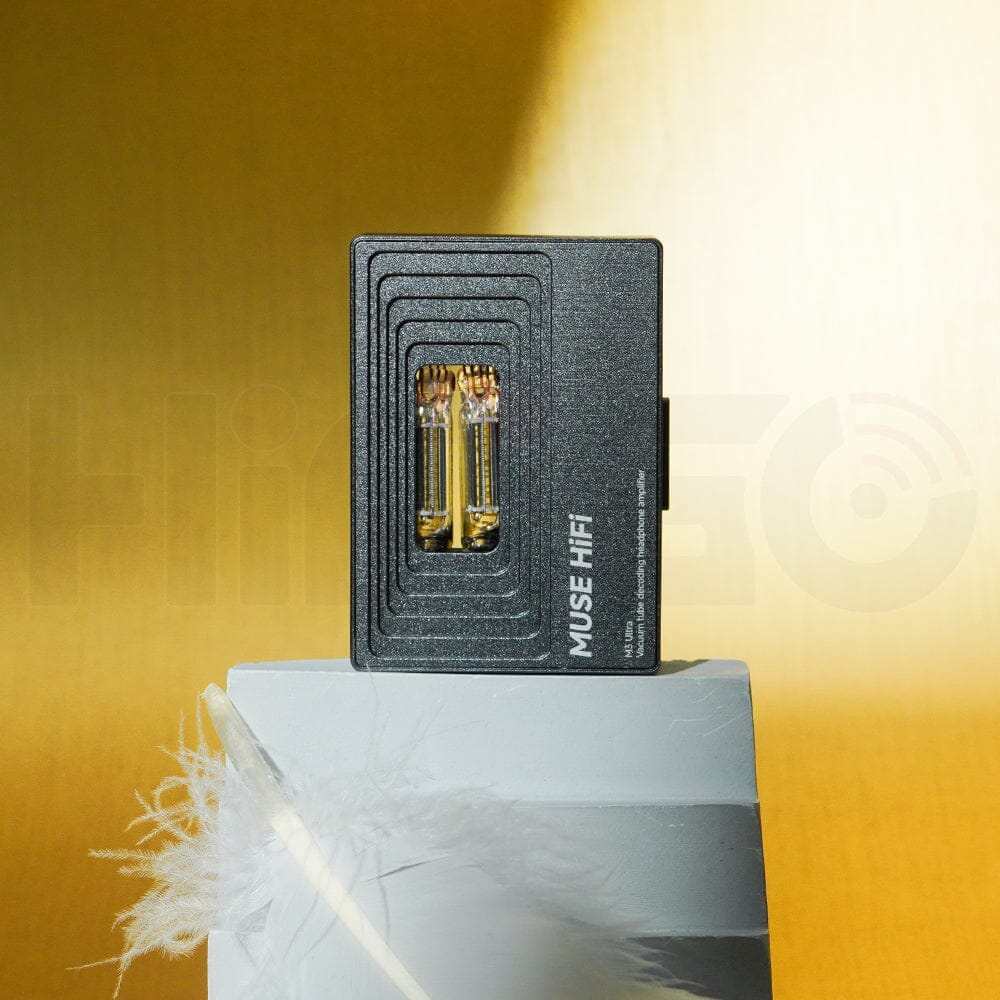
What it is
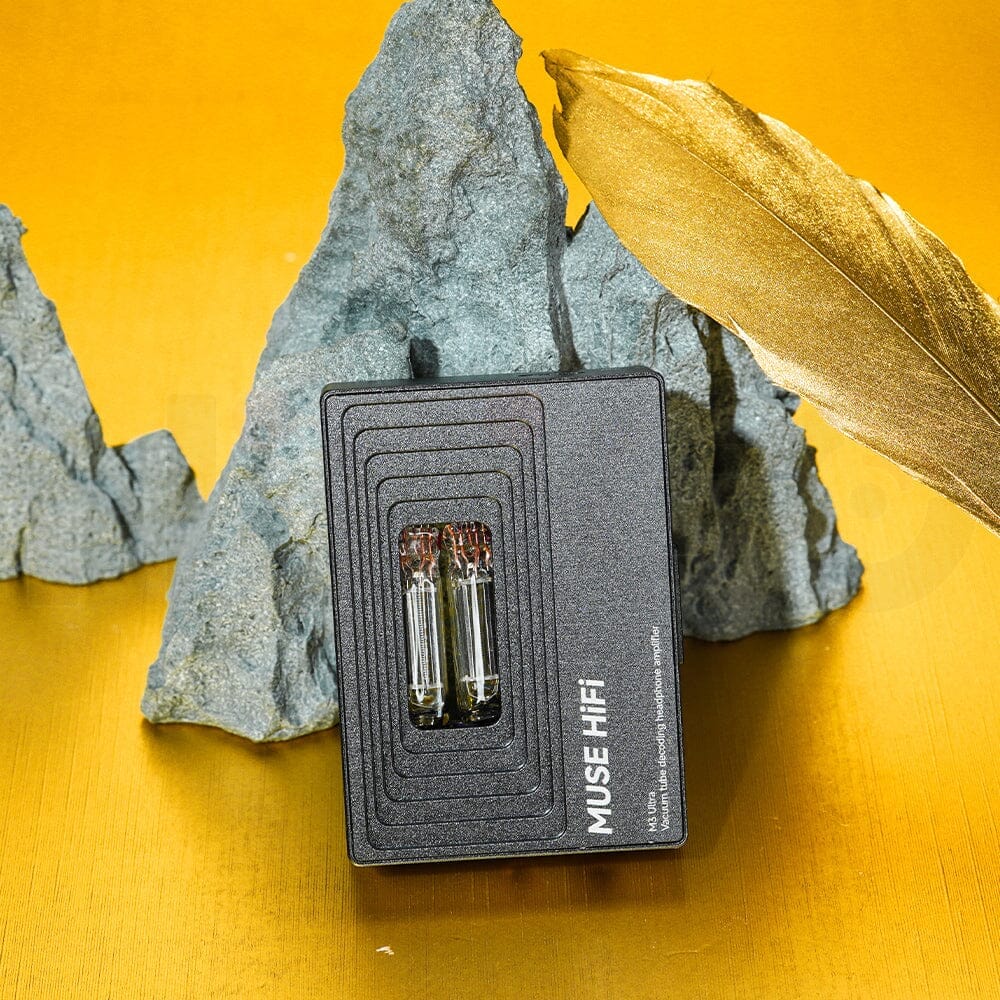
A portable vacuum-tube DAC and headphone amp: dual Raytheon JAN6418 military-spec pentode tubes, an ESS ES9028Q2M DAC and a dedicated ES9603Q amp stage in a fully balanced circuit. 460mW single-ended and 480mW from the 4.4mm balanced socket into 32Ω; THD+N 0.0003%, SNR up to 121dB; PCM to 32-bit/384kHz and native DSD256. 55 grams, no battery — it runs off the phone or laptop it is plugged into. Muse calls the tube window the "World Gate", and when the music plays the tubes glow.
Build and controls
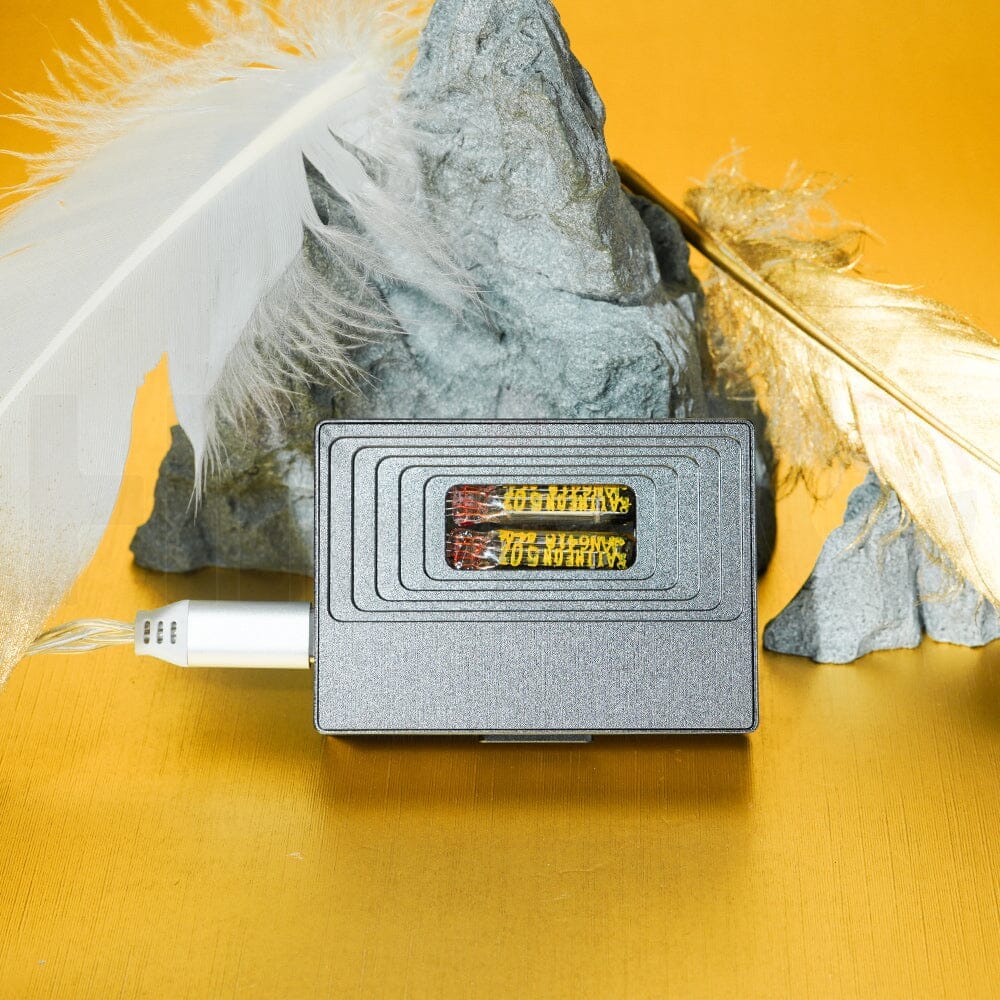
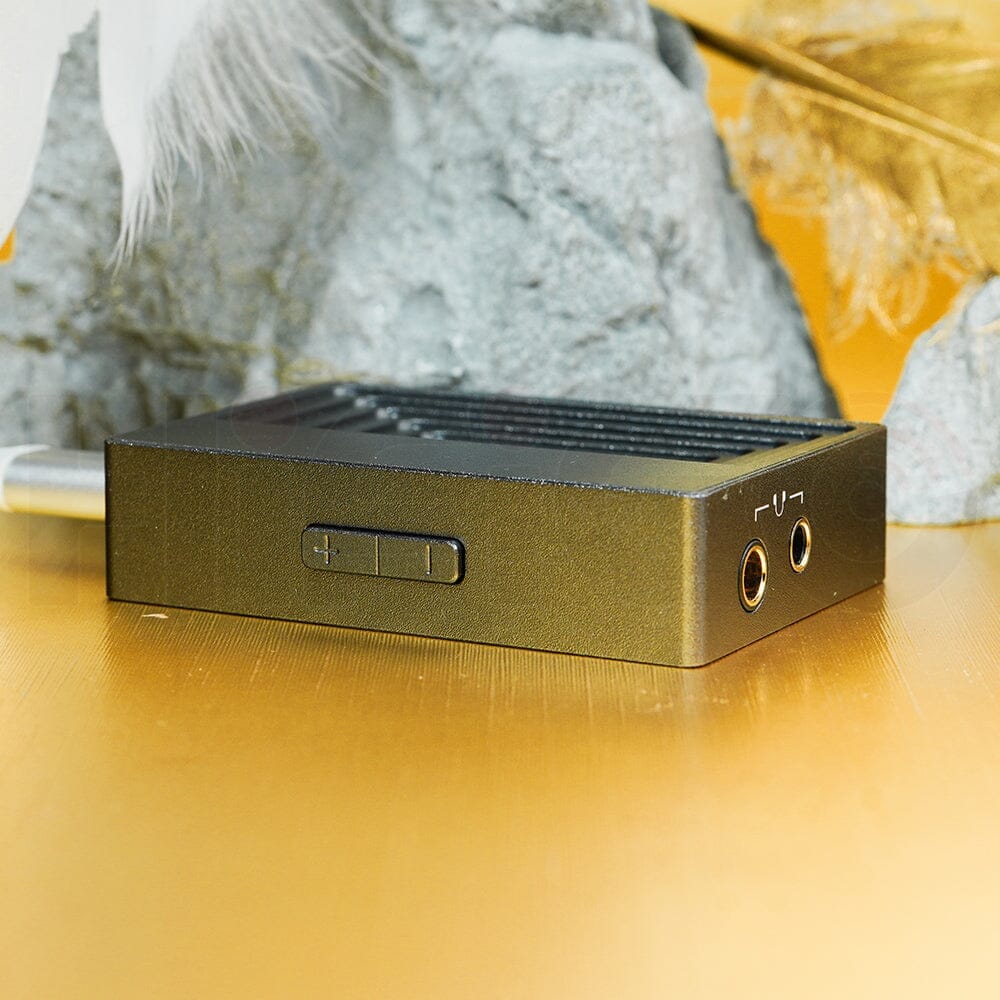
Stepped aluminium chassis, a side volume rocker that is independent of the phone and remembers where you left it, and two outputs (3.5mm and 4.4mm). Tubes in a pocket usually mean microphonics; Muse claims three anti-vibration measures and nothing in my sessions, or either published review, reports a ping.
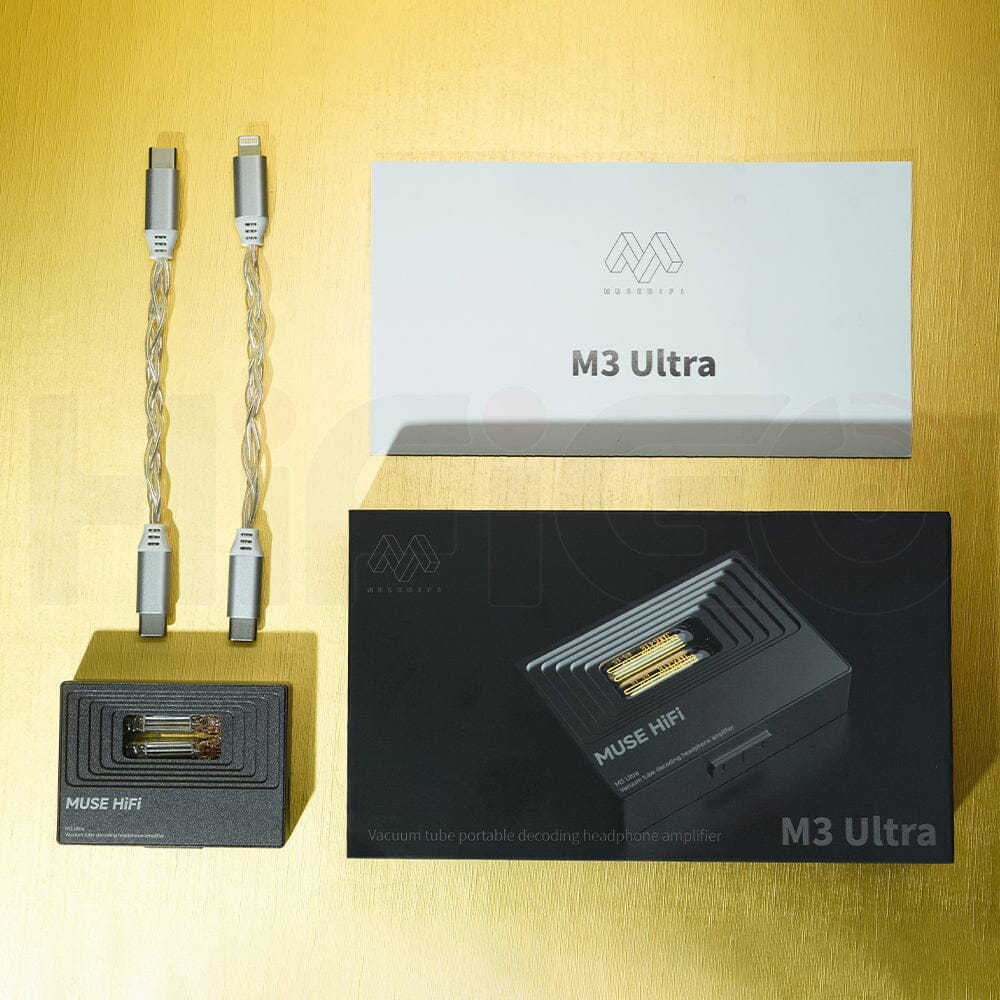
In the box
A braided USB-C-to-C cable and a Lightning cable, so it works out of the box with Android, a laptop or an older iPhone, plus the manual. No case, and no battery to charge — though it does draw from the host, which is worth knowing on a long session.
The sessions
Reviewer profile: The Stage Builder. The M3 Ultra has been the source for the Arc, Fiesta, Defiant and Nebula sessions across 17–30 August 2026. What follows are the notes about what the chain was doing, not just the earphone.
Listening journey
Pula Audio Arc
Warm, weighty, immersive. EDM and trance locked in and flowed; the Arc's own laid-back character came through intact rather than being pushed around. Fugue State's "Weilis, To Apeiron" was "something you can sit inside for an hour". Non-fatiguing over long sessions.
Juzear Fiesta
Bass with real command and grip; heart, head and feet going on Oni Mode. It came alive the moment the rocker went up — and when I pushed the level too far the top end got edgier, which a cut at the rocker settled. "Ripping bass, just blasts in place."
Juzear Defiant
Punch, warmth and depth, the music pulled closer to the listener. Proper slam on the bass, tactile hand percussion, vocals integrated rather than floating. Head bobbing, immediate momentum. "More drive, more slam, more emotional urgency."
Juzear Nebula
A cool, clinical earphone that still sounded natural through the tubes: musicians breathing, plucks carrying the finger, crescendos legible. Clear, precise, controlled and effortless. Hours with no fatigue.
Critical observations
Direction of push, axis by axis
Tone: warmer and fuller, tube body without the syrup; the Arc's warmth filled a room, and even the genuinely cool Nebula came across as natural rather than thin. Detail: more surfaces — fingers on strings and the breathing of the Punch Brothers on the Nebula, tactile hand percussion and real vocal articulation on the Defiant, nothing smeared. Dynamics: the most consistent effect — "blasts into place", "far more physical", and on the Defiant "proper slam… deeper and more physical than expected for the price". Stage: wider, deeper, taller — separation and staging were the words that came up unprompted on both the Arc and the Nebula, and stage is the axis I weight highest. Timing: it locks the notes together — "command and grip", "toe-tapping goodness falls into place effortlessly". Comfort: softer edges on most things (hours on the Nebula, Arc and Defiant with no fatigue), with the one exception that it amplifies whatever is there — on the Fiesta at a raised, unmatched volume it made the top end edgier until I brought the level back down at the rocker. Emotional engagement: the whole point — "heart, head and feet all grooving away" (Fiesta), "immediate momentum" (Defiant), "sit inside for an hour" (Arc).
Sound, in short
The tubes add body and weight without rolling off the top: Headfonics calls it "clear, transparent and airy" with excellent upper-treble extension; Prime Audio hears it "slightly on the warmer side of neutral". I am between them. Bass gets weight and grip rather than extra speed — the published caveat is that it is "not as tight or hard-hitting" as a good solid-state dongle, and I agree that what it adds is weight, not speed. Detail survives ("highly resolving"). The slight lower-treble lift the Headfonics review calls "very minimal" is real, and a raised volume on a sensitive IEM can expose it. 480mW balanced is far more than any IEM needs and nothing across four sessions mentions hiss, the acid test on a sensitive set. It runs warm, not hot, and Headfonics is right that it runs out of steam pushing full-size headphones loud — this is an IEM device that copes with headphones.
What everyone else says
Headfonics 8.3/10, staging "among the best I have heard on portable DAC amplifiers"; Prime Audio 4.6/5, "at $99 the Muse HiFi M3 Ultra is an absolute steal." I do not do scores, but I would sign the sentence.
Honest limits
No level-matched A/B of the M3 Ultra against another source with the same earphone at matched volume yet; "enhances every dimension" is a strong impression across four sessions, not a controlled result, and the matched test is session two. What the tubes add they also cost a little: warmth and flow at the expense of the last of the solid-state speed and edge-definition, a trade a bass-speed-first listener should know about. My own high volume dependence and 5–8kHz pain region are exactly the sort of thing a device with an easy, independent rocker makes visible — which is a point in its favour. No measurements taken; every observation is IEM listening, the headphone comments are the published reviewers'. Product photography is Muse HiFi's, via HiFiGo, credited. I bought it.
- Driver Configuration
- Portable tube DAC/amp — dual Raytheon JAN6418 tubes
- Driver Details
- ESS ES9028Q2M DAC + dedicated ES9603Q amp stage, fully balanced circuit; SA9137L USB (UAC 2.0)
- Impedance
- Output: 460mW @ 3.5mm SE, 480mW @ 4.4mm balanced (32Ω)
- Sensitivity
- THD+N 0.0003%, SNR up to 121dB
- Weight
- 55 g
- Frequency Range
- PCM 32-bit/384kHz, native DSD256
- Build Materials
- Stepped aluminium chassis, "World Gate" tube window, triple anti-vibration (analogue filtering + active microphonic cancellation + silicone damping)
- Cable Connectors
- 3.5mm single-ended + 4.4mm balanced outputs; USB-C input. Side volume rocker with memory. 65 × 46.5 × 16 mm.
- Power Requirements
- No battery — draws from the host device (phone/tablet/laptop)
- Accessories
- USB-C to USB-C cable, USB-C to Lightning cable, manual
- Build Quality Notes
- Launched 8 June 2026 at US$109.99. Headfonics 8.3/10; Prime Audio 4.6/5. Photos: Muse HiFi via HiFiGo, credited.
Buy it before you buy your next earphone. Every IEM I have put through the M3 Ultra has come out bigger, warmer, more physical and more involving — a bigger, more holographic stage, more grip on the groove, and far more emotional involvement. For US$110 that is the best return in my chain.
Buy it if…
you listen on IEMs from a phone or laptop and want them to sound like more than a phone or laptop; if stage, body and involvement matter to you, because it pushes all three hard; if you want tube colour without the tube tax — no hiss, no pings, no battery; and if you want an independent volume control you can actually reach, which is a real feature and not just a convenience.
Skip it if…
or pair carefully, if your main headphones are hard-to-drive planars or full-size cans you play loud; if you want the tightest, fastest bass, where a good solid-state dongle will be leaner; or if you are treble-sensitive and pairing it with a very sensitive, lower-treble-lifted IEM — match your levels and keep the rocker honest.